NASA has chosen the technology to help it land future spacecraft on unmapped planets. Meta uses the technology for artificial intelligence. Chinese engineers have turned to it to encrypt data. And it could represent the next front in the semiconductor trade war between the United States and China. The technology is RISC-V, pronounced “risk five.” It evolved from a university computer lab in California to a foundation for myriad chips that handle computing chores. RISC-V essentially provides a kind of common language for designing processors that are found in devices…
Tag: Regulation and Deregulation of Industry
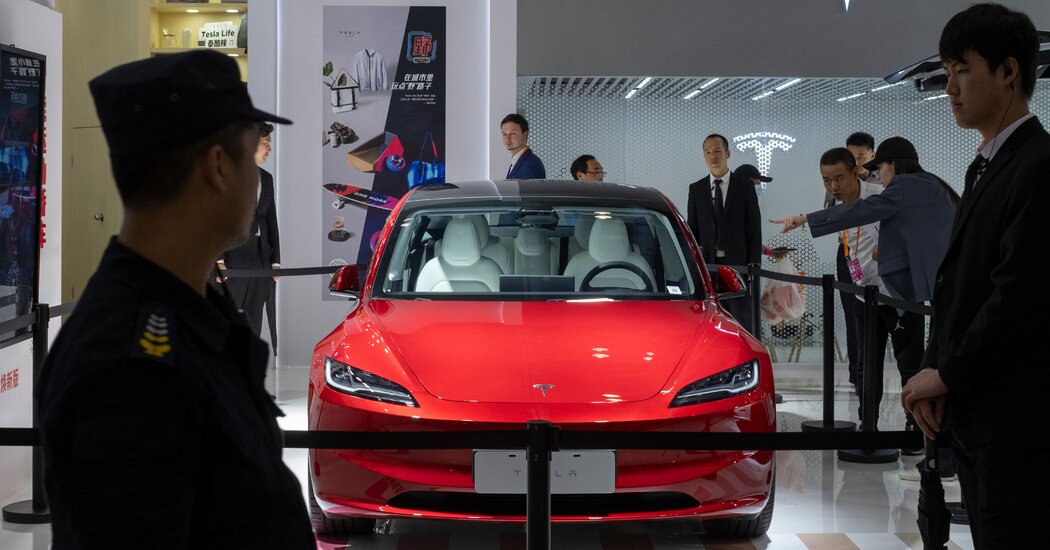
Tesla Recalls 1.6 Million Cars in China to Fix Self-Driving Systems
The Chinese government announced on Friday that Tesla would recall practically all of the cars it has sold in the country to adjust their assisted-driving systems, less than a month after a similar recall in the United States. To address the problems, Tesla will transmit updated computer software to its cars in China, the State Administration for Market Regulation said. The updated software involves “adding additional automatic assisted steering control,” the regulator said. It also said that Tesla would remind customers to pay attention to their driving and follow all…
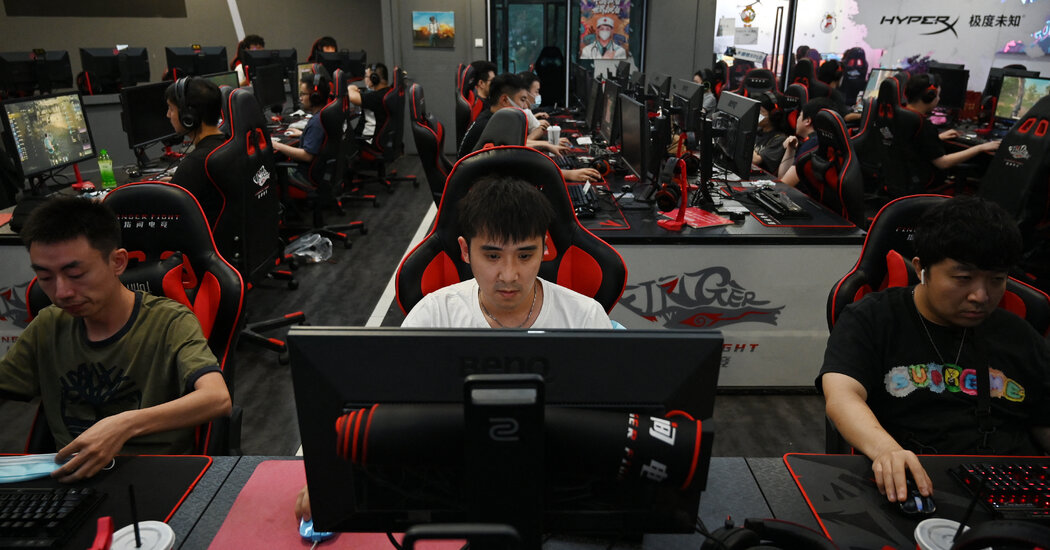
Tencent and Netease Rally on Signs China May Ease Gaming Proposal
The stock prices of Chinese video game companies rebounded Wednesday after investors seized on signals that the government was having second thoughts about proposed regulations on gaming. Since the weekend, regulators have attempted to calm the market after shares of the two largest video game companies, Tencent and Netease, plunged on Friday. When trading resumed after the four-day holiday weekend in Hong Kong, Tencent rose about 4 percent and Netease jumped 12 percent, recovering some of their losses. The events of the past several days underline the push-and-pull forces in…
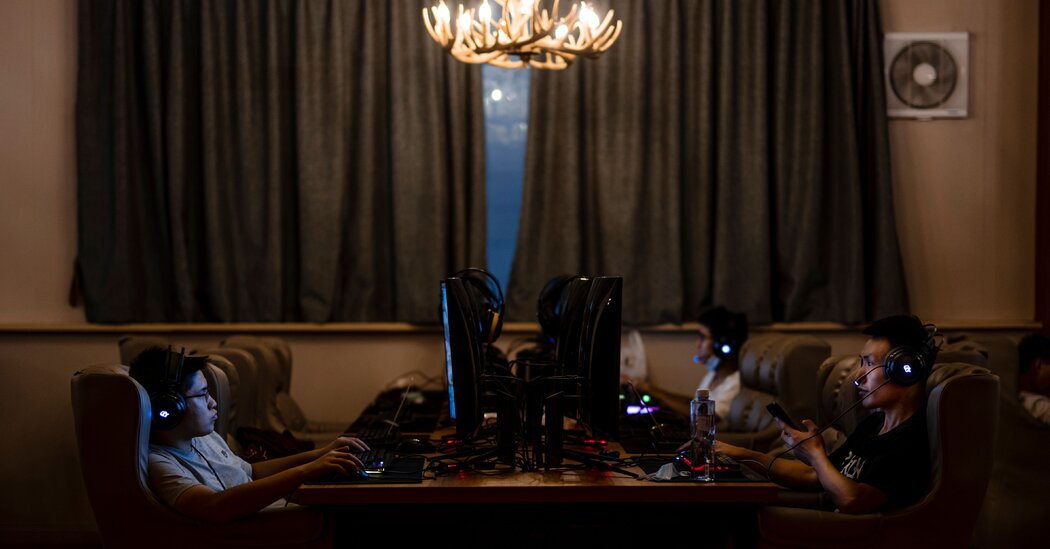
China Unveils New Restrictions on Online Video Games
The Latest Chinese regulators announced new restrictions Friday on online video games, which they said were aimed at tightening the management of the industry and protecting the country’s minors. The proposed rules, which are subject to public comment before being made final, are the latest in several rounds of curbs on the industry over the last few years. The plan would call for users to have spending limits on the game platforms and would prohibit minors from tipping videogame live streamers. The draft rules, issued by the National Press and…
Five Ways A.I. Could Be Regulated
Though their attempts to keep up with developments in artificial intelligence have mostly fallen short, regulators around the world are taking vastly different approaches to policing the technology. The result is a highly fragmented and confusing global regulatory landscape for a borderless technology that promises to transform job markets, contribute to the spread of disinformation or even present a risk to humanity. The major frameworks for regulating A.I. include: Europe’s Risk-Based Law: The European Union’s A.I. Act, which is being negotiated on Wednesday, assigns regulations proportionate to the level of…
Xi Jinping Is Asserting Tighter Control of Finance in China
In his decade as China’s top leader, Xi Jinping has asserted greater control for himself and the Communist Party over the country’s economy. Now, Mr. Xi has moved to extend that power more forcefully than ever over China’s financial system. The Communist Party issued a detailed ideological statement on Friday in Qiushi, the party’s main official theoretical journal, that made clear that it expected banks, pension funds, insurers and other financial organizations in China to follow Marxist principles and pay obedience to Mr. Xi. The Qiushi paper, which was being…
U.S. Limits China’s Ability to Benefit From Electric Vehicle Subsidies
The Biden administration proposed new rules on Friday aimed at shifting more production of electric vehicle batteries and the materials that power them to the United States, in an attempt to build up a strategic industry now dominated by China. The rules are meant to limit the role that firms in China can play in supplying materials for electric vehicles that qualify for federal tax credits. They will also discourage companies that seek federal funding to build battery factories in the United States from sourcing materials from China or Russia.…
U.S. Debates How Much to Sever Electric Car Industry’s Ties to China
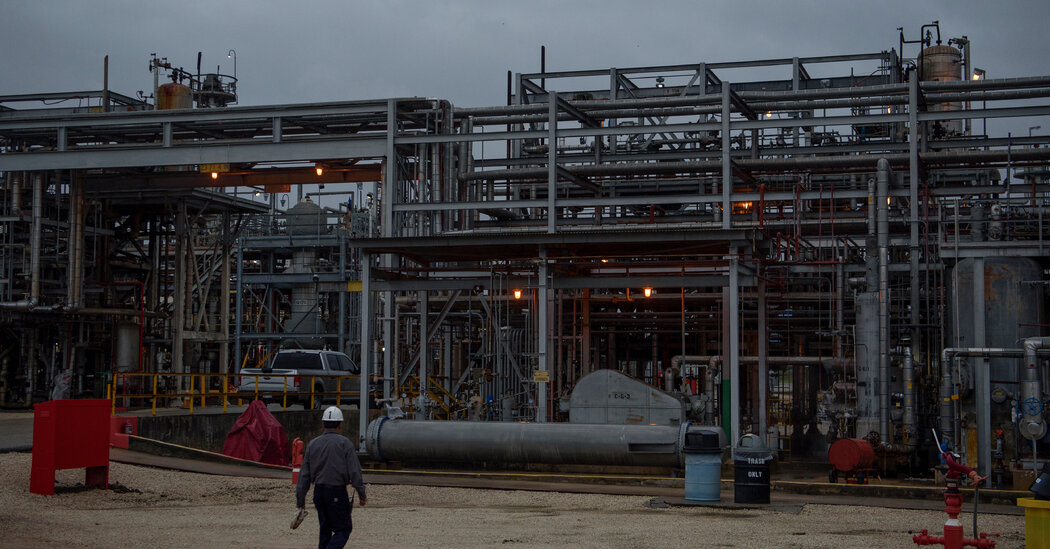
The Biden administration has been trying to jump-start the domestic supply chain for electric vehicles so cleaner cars can be made in the United States. But the experience of one Texas company, whose plans to help make an all-American electric vehicle were upended by China, highlights the stakes involved as the administration finalizes rules governing the industry. Huntsman Corporation started construction two years ago on a $50 million plant in Texas to make ethylene carbonate, a chemical that is used in electric vehicle batteries. It would have been the only…
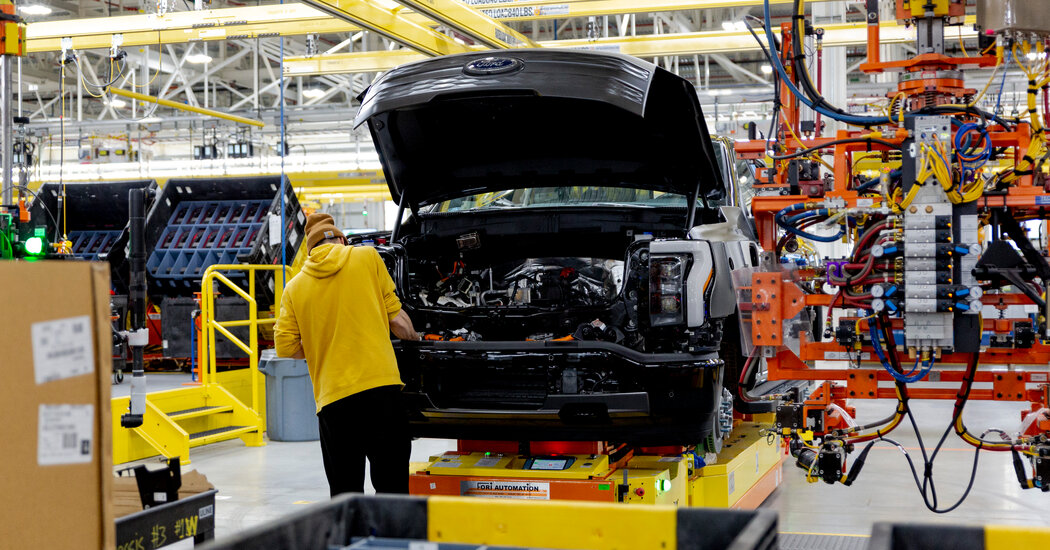
A New Law Supercharged Electric Car Manufacturing, but Not Sales
President Biden’s signature climate law has stimulated a surge of investment in electric vehicle production across the country, including tens of billions of dollars on battery plants across the South and new assembly lines near the Great Lakes. Based on early evidence, it is succeeding at a goal that economists have long considered difficult and costly: using the power of government to rapidly grow a new industry. That growth could prove crucial for the other side of the electric vehicle equation: enticing more consumers to buy them. That’s because Mr.…
The Multimillion-Dollar Machines at the Center of the U.S.-China Rivalry
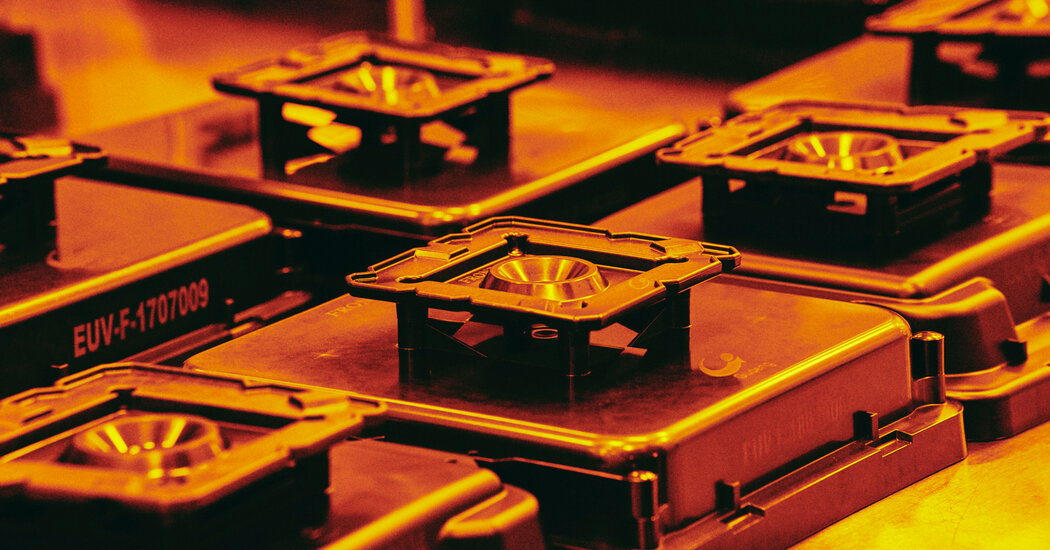
They are smooth white boxes, roughly the size of large cargo vans, and they are now at the heart of the U.S.-Chinese technology conflict. As the United States tries to slow China’s progress toward technological advances that could help its military, the complex lithography machines that print intricate circuitry on computer chips have become a key choke point. The machines are central to China’s efforts to develop its own chip-making industry, but China does not yet have the technology to make them, at least in their most advanced forms. This…